Building guarantees in France
After-sales care for your home in Provence and on the French Riviera
If you are used to a builder's own warranty or an NHBC-style certificate, the French approach can come as a surprise. Here, the protection you receive after building or renovation work is written into the Civil Code and backed by insurance that every contractor is required to hold. Three guarantees start on the same day, the formal handover of the works, and the longest of them, the ten-year warranty (garantie décennale), stays attached to the property even if you sell it.
This guide explains how those guarantees work for owners who spend part or all of the year abroad, what they actually cover in a typical Provençal house, and how ACR Provence handles after-sales once the keys are back in your hands. If you are still at the purchase stage, our guide to buying and renovating property in Provence covers the steps that come before the works.
GET A FREE QUOTE
From signature to year ten
The timeline of your guarantees, step by step
Each guarantee has a precise starting point and a precise end. Knowing the calendar is the simplest way to avoid missing a deadline, especially when you spend most of the year in another country. This is the order in which things happen.
French law requires every contractor to name its ten-year insurer on its quotes and invoices, along with the geographical area the policy covers. Ask for the certificate itself (attestation d'assurance) and check two things: that it is valid for the year the work starts, and that it covers the type of work planned. A policy written for painting does not protect structural masonry or a new roof.
The handover is a legal act, not a courtesy visit. You walk through the property with the contractor, test everything that can be tested and sign a handover report (procès-verbal de réception). Every visible defect must be written into that report as a reservation (réserve); a visible defect left off the report is generally treated as accepted. If you cannot travel, a written power of attorney lets someone you trust, such as your project manager (maître d'œuvre), attend and sign for you.
For twelve months after handover, the garantie de parfait achèvement obliges the contractor to put right every defect listed in the report, and every new defect you notify in writing during that year, whatever its size: a sticking door, a hairline crack in fresh render, a tile that sounds hollow. Send your notice by email and by registered post so that the date cannot be disputed.
Equipment that can be removed or replaced without damaging the building, such as taps, radiators, electric shutters, interior doors or a heating control unit, is covered for at least two years after handover by the garantie biennale. If an item stops working properly during that period under normal use, the contractor repairs or replaces it.
For ten years, the contractor and its insurer are liable for damage that threatens the solidity of the building or makes it unfit for its purpose: a structural crack in a new extension, a roof or terrace that lets water in, a pool shell that leaks, subsidence after foundation work. Because the cover comes from the insurance policy in force when the work started, repairs are still paid for even if the company has since closed.
The guarantees follow the building, not the owner. When a house is sold less than ten years after works, the notary handling the sale (notaire) asks the seller for the insurance certificates of every company involved, and the buyer inherits the remaining years of cover. If you are buying a recently renovated property, ask for these documents before you sign the preliminary contract (compromis de vente).
What the guarantees will not pay for
None of the three guarantees is an all-risks policy. They cover defects in the work itself, not normal wear and tear, damage caused by a lack of maintenance, or changes made later by another trade. A pool that leaks because its filtration was never serviced, or a facade streaked because the gutters were left blocked, falls outside their scope.
Cosmetic issues that were visible on handover day but not written into the report are also hard to claim afterwards. This is why the handover deserves time: in good daylight, with every tap turned on, every shutter operated and every door opened and closed.
Finally, the ten-year warranty protects work that has been formally handed over. Work abandoned halfway, or finished without a signed report, leaves an owner in a much weaker position, which is why it pays to have the handover organised properly even when you are thousands of miles away.
Which guarantee applies? Six situations in Provençal homes
The right guarantee depends on what failed and when. These examples, typical of stone farmhouses, coastal villas and town apartments across the region, show how the three layers of protection fit together.
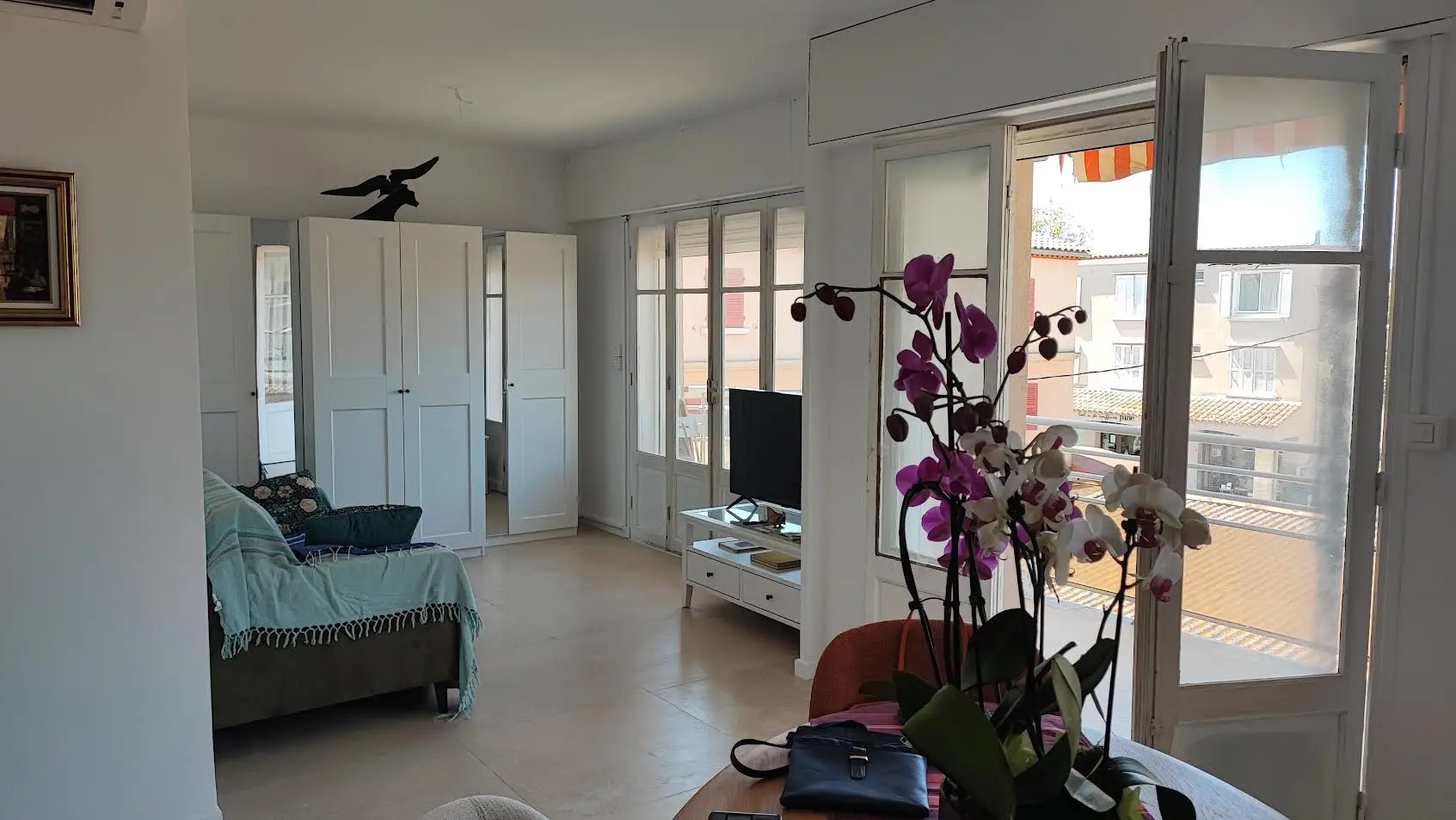
Recorded as a reservation in the handover report, it falls under the one-year guarantee. The contractor agrees a date to replace it, and the reservation is lifted in writing once the work is done.
Hairline cracks that appear in new render within twelve months are reported under the one-year guarantee. If they later turn out to reflect movement in the wall itself, the ten-year cover can take over.
Removable equipment of this kind is covered by the two-year guarantee of proper functioning, provided it has been used normally and not modified by someone else.
A leak that makes a room unusable is typical ten-year damage, because the building no longer fulfils its purpose. It applies whether the terrace was built new or entirely renovated.
Pipes embedded in the screed cannot be removed without breaking the floor, so a failure is generally handled under the ten-year warranty. The thermostat on the wall, by contrast, falls under the two-year cover.
A leak in the shell or its structure makes the pool unfit for use and is dealt with under the ten-year warranty. A faulty pump or a tired seal is a matter of equipment cover and routine maintenance.
How ACR Provence handles after-sales
A guarantee is only as useful as the company standing behind it. This is how we organise the end of a project and what follows it.
Our structural work is covered by our décennale insurance, and the certificate is handed to you at the end of the works so that it can go straight into your property file.
As a general contractor, we coordinate masonry, plumbing, electrics, tiling and finishes. After handover you have a single company to call, rather than a chain of separate trades pointing at each other.
Salon-de-Provence, Cavaillon, Le Cannet and Trans-en-Provence cover the Bouches-du-Rhône, the Vaucluse, the Alpes-Maritimes and the Var, so the team that knows your project is never far from the house.
Our free quote is drawn up after a site visit, broken down line by line, and the price is fixed at signature. Years later, that breakdown shows exactly what was done, which makes any claim far simpler.
Insulation and heating work eligible for French state grants is carried out with RGE-certified partners, as explained on our page about energy renovation in Provence.
Rubble is taken to approved facilities as the work progresses and floors stay protected, so the handover walk-through can focus on the quality of the work rather than on dust.
Questions overseas owners ask about French guarantees
Is the ten-year warranty transferred if I sell the house?
Yes. It is attached to the building, so a buyer benefits from the remaining years automatically. Keep the insurance certificates and the signed handover report together: the notary will ask for them, and missing documents can delay or complicate a sale.
I live abroad. Do I have to attend the handover in person?
No. A written power of attorney allows a representative to inspect the works, record reservations and sign the report on your behalf. Choose someone who knows what to look for, and ask for photos of every reservation so that you can follow up remotely.
What is dommages-ouvrage insurance, and do I need it?
Building damage insurance (assurance dommages-ouvrage) is a policy the owner takes out before works begin. When ten-year damage occurs, it pays for repairs quickly, without waiting for experts to decide which contractor is liable. French law makes it compulsory for work that falls under the ten-year warranty, such as an extension or a structural renovation. Many private owners skip it, but it is worth discussing with an insurer before signing, because buyers and their notaries often ask for it when a house is sold within ten years.
A crack has appeared two years after the works. What should I do?
Photograph it with a coin or ruler for scale, date the photos and write to the contractor describing where the crack is and how it has changed. If it may affect the structure, send a registered letter so that the ten-year claim is properly dated, and contact your building damage insurer if you have one. Avoid filling or painting over the crack before it has been inspected.
The documents to keep in your property file
Whether you make a claim or sell in a few years' time, the same papers will be requested. Keep a paper set in the house in France and a scanned copy wherever you live.
Continue planning your project:
Renovation cost guide for Provence | Project management for non-resident owners
Reporting a defect after handover
Date and locate it
Note when you first noticed the problem and exactly where it is: room, wall, height. A quick sketch of the floor plan saves a lot of back-and-forth.
Photograph it
Take one wide shot to show the context and several close-ups with an object for scale. Repeat a few weeks later if the defect seems to be changing.
Write to the agency
Send your photos and description to the agency that carried out your works. For a ten-year claim, confirm by registered letter with acknowledgement of receipt (lettre recommandée avec accusé de réception).
ACR Provence in English
Return to the home page to explore our services, the areas we cover and our buyer guides.