Renovation Company in Aix-en-Provence Old-town apartments, townhouses and village homes across the Pays d'Aix
Aix-en-Provence rewards its buyers with honey-coloured stone, shaded squares and a property market that holds its value. It also asks a lot of anyone who wants to change a building. Much of the old town lies inside a protected heritage area, where a new window, a roof vent or an air-conditioning unit may need the approval of the state heritage architect (Architecte des Bâtiments de France, or ABF) before a single tool comes out.
ACR Provence is a general building contractor that takes charge of the whole renovation of your Aix property: structure, plumbing, electrics, plastering, tiling, joinery and finishes, plus the planning paperwork. You deal with one company and one contact person, whether you live in Aix all year or spend only a few weeks a year in Provence.
Get a free quote within 48 hours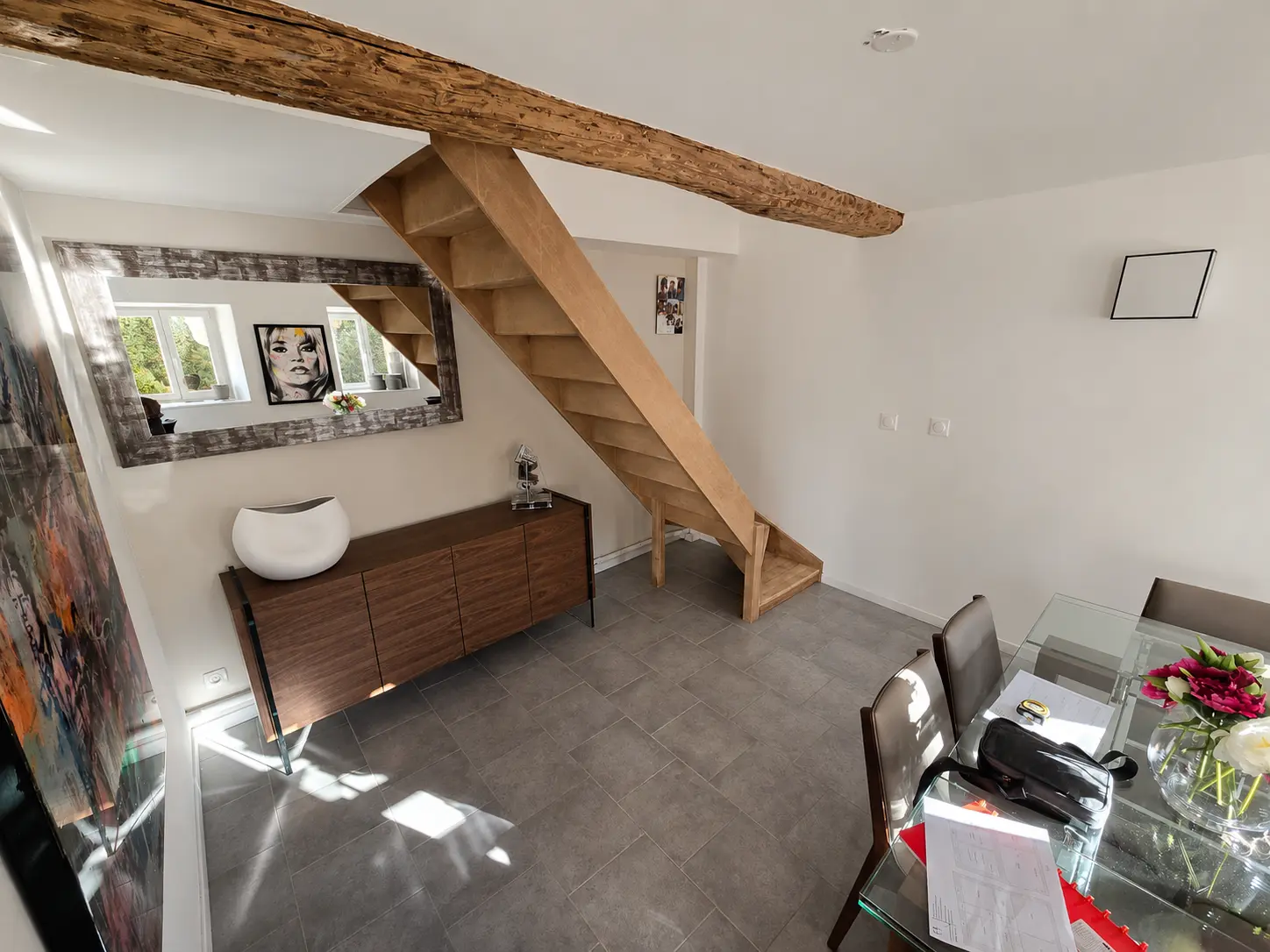
Aix-en-Provence property types and what renovating each one involves
Buyers arriving in Aix usually look at three very different kinds of home, each built in its own way, governed by its own rules and reached through its own practical obstacles. Knowing which one you own, or are about to own, is the first step towards a realistic budget and timetable.
The figures below are typical budgets for a complete renovation observed on the Aix market; your own quote always follows a visit of the property.
Why they are demanding
These 17th- and 18th-century town mansions were built in dressed limestone around shared courtyards and stone staircases. Floors rest on timber joists, ceilings may still carry original plasterwork, and few walls are truly straight. Anything visible from the street, and in listed buildings some interior features too, is reviewed by the ABF.
Access is the other challenge: pedestrian lanes, no room for a skip, restricted delivery hours and materials carried upstairs by hand.
Typical works
New wiring hidden beneath floors or behind linings, a bathroom or kitchen fitted into a room never designed for one, sound insulation between storeys, restoration of oak parquet and lime-based finishes on courtyard walls.
Why they are demanding
Concrete floor slabs and concrete load-bearing walls make these flats predictable, but not effortless. A new doorway or duct means diamond cutting, cables and pipes are sometimes buried in the slab, and any work touching the structure or shared pipework needs the consent of the co-owners' association (copropriété) and its managing agent (syndic).
Some partitions that look lightweight turn out to be structural, so we check every wall before anything comes down.
Typical works
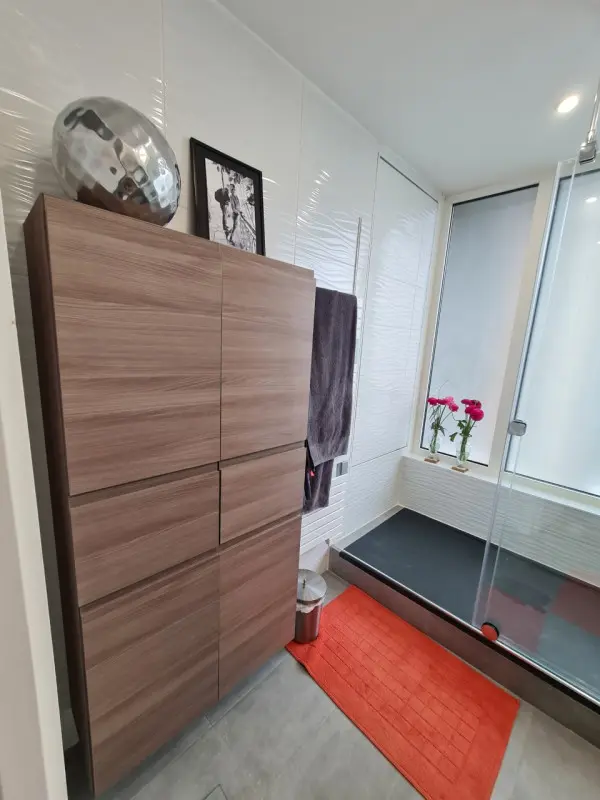
Walk-in showers, kitchens opened onto the living room, new flooring, an upgraded consumer unit, sound insulation against neighbours and a complete repaint: the kind of refresh that turns a dated flat into a comfortable base in town.
Why they are demanding
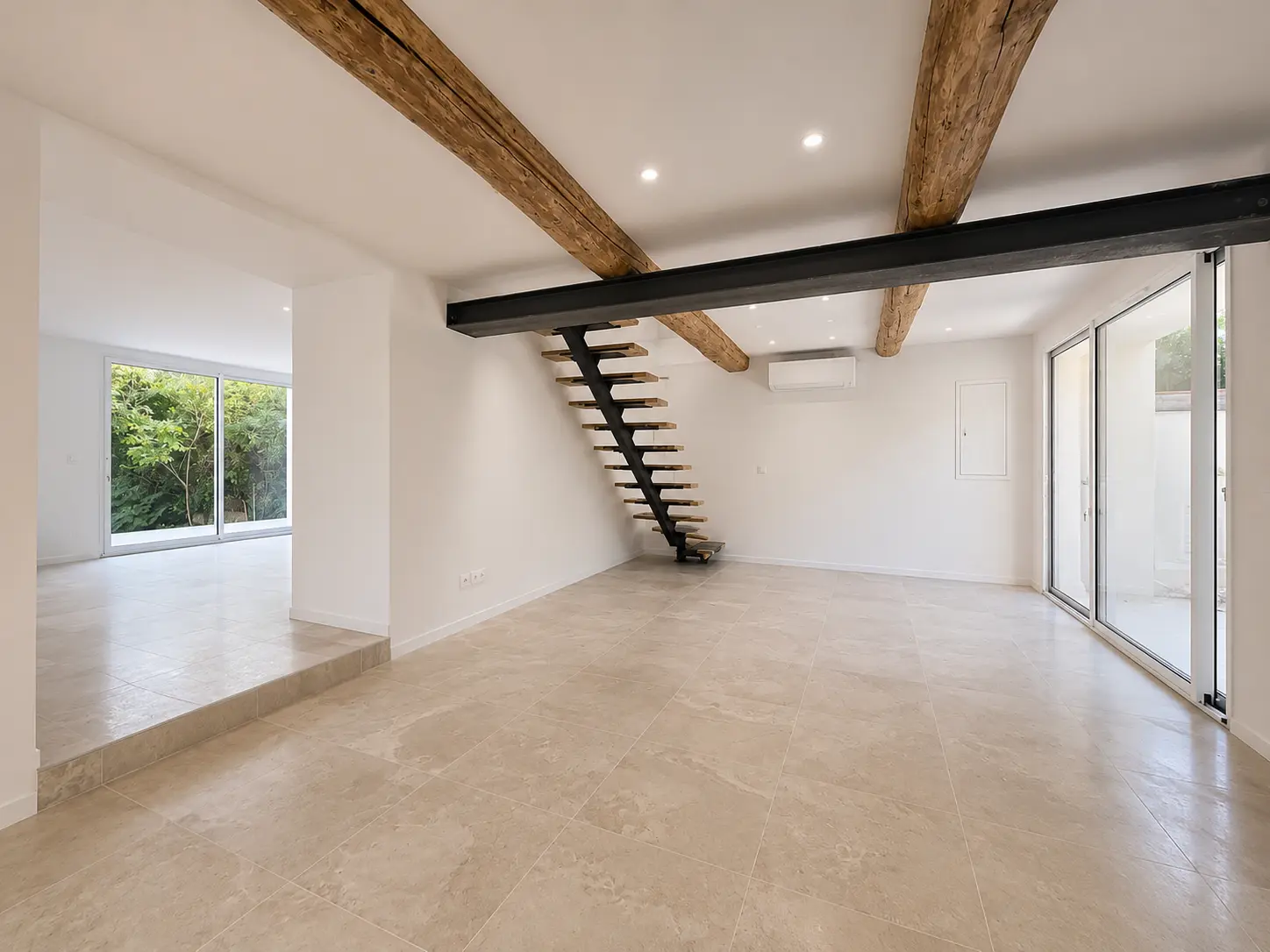
Many village houses in the Pays d'Aix grew in stages: a rubble-stone core, a block-built addition from the 1970s, perhaps a glazed room added later. Where old and new masonry meet you find cracks, cold bridges and leaks. Old floors laid straight onto the ground can hide rising damp, and running new cables through thick stone walls calls for electricians used to heavy renovation.
Typical works
Structural repairs and crack treatment, damp-proofing at the base of the walls, a new bathroom in a former storeroom, knocking rooms together into one large living space, and external insulation finished with render.
The country manor houses (bastides) found around Aix call for the stone, lime and roofing techniques described on our page about mas and bastide renovation in Provence.
Planning rules in Aix-en-Provence, explained for overseas owners
France separates permission to build from the building work itself, and in Aix the permission side carries extra weight. Before we price anything, we check which rules apply to your address; if an application is needed, we prepare it, file it and follow it through on your behalf.
The protected historic centre
The old town, including the Quartier Mazarin, the streets around the cathedral and the Cours Mirabeau, is governed by a detailed conservation plan (Plan de Sauvegarde et de Mise en Valeur, PSMV). Inside it, changing a window, a shutter, a render colour, a roof covering or an opening in a façade requires the heritage architect's agreement, and in listed buildings some interior elements are protected as well. Approval takes longer here than elsewhere, so it has to be built into your timetable from the start.
The wider heritage zone
Around the historic core, a broader protection area regulates façade materials, render colours and roofs, while leaving interior work largely free. Applications filed there are still reviewed by the ABF, which adds time and can come with conditions on the materials you use.
A prior declaration (déclaration préalable) covers smaller changes: altering a façade, replacing windows outside the conservation plan area, adding a small floor area or building a boundary wall. It is normally processed in one month, two when the ABF has to be consulted.
A building permit (permis de construire) is needed for new structures and for extensions above 20 m² of floor area or footprint, a threshold raised to 40 m² in some urban zones. In an ABF area the review period extends to three months, and listed buildings require a dedicated application.
In stone buildings from before 1948, insulation and renders must let the walls breathe. Wood fibre, hemp and lime work with the masonry; cement renders and synthetic insulation trap moisture and damage it over time.
Aix's local development plan (Plan Local d'Urbanisme) sets the footprint, height and boundary distances that decide whether an extension or outbuilding is possible at all. We check it before you commit to a design, ideally before you sign to buy.
Your renovation in Aix-en-Provence, from first visit to handover
Most of our Aix clients cannot be on site every week, so the way we run a project is built around that: one contact person, paperwork priced in euros line by line, and decisions taken at planned moments rather than in rushed phone calls. If you live abroad, our page on project management for non-resident owners explains how remote follow-up works.
Free site visit and survey
We visit the property and check its structure, wiring, plumbing, heating and insulation, then confirm which planning rules apply to the address. If you are still buying, this visit is most useful before the sale becomes final, so you know exactly what you are taking on.
Itemised quote and provisional schedule
You receive a quote broken down trade by trade, from structural work and electrics to joinery, floors and painting, with unit prices instead of a single lump sum. It comes with a schedule showing the order of works and a target completion date.
Approvals and ordering
Where a prior declaration or building permit is required, we compile the file, submit it and see it through, including the technical file for the ABF in protected areas. Materials are ordered in parallel so the site can open as soon as approval arrives.
Structural work first
Demolition, new openings in load-bearing walls with steel beams, floor reinforcement and slab work come first: they are the dustiest stage and must be finished before any finishing trade arrives. Rooms outside the work area are protected and the site is cleaned every day.
Services, insulation and partitions
Electricians and plumbers run the new circuits and pipework, insulation suited to each wall type goes in, and plasterboard partitions set out the final layout. Regular site meetings let you, or someone you trust, check progress.
Finishes, handover and guarantees
Floors, paintwork, kitchen and bathroom fittings are completed and every system is commissioned. Handover (réception) is carried out room by room and recorded in a signed report listing any snags (réserves) still to be put right. Structural work is covered by the 10-year builder's warranty (garantie décennale), detailed on our page about guarantees and after-sales service.
Eight questions to settle before work starts on your Aix property
Foreign owners are often surprised by how many of these points are decided before the first day on site. We go through each of them with you during the survey.
Is the address inside the protected centre? The answer decides which materials you may use, how long approval takes and whether a rooftop air-conditioning unit is possible at all.
What do the sale surveys say? The file prepared by the notary (notaire) includes the energy performance certificate (DPE) and, depending on the building's age, asbestos and lead reports. They change the scope of works, so read them before we price.
Do the co-owners need to vote? In an apartment building, works affecting the structure, the façades or shared pipes need approval at the co-owners' general meeting, which may be held only once a year.
Which walls carry the building? Opening up a stone or concrete wall requires a calculation and a steel beam sized for the load, never guesswork.
Can the street take a skip or scaffolding? In the old town, placing a skip, scaffold or materials lift on the public road needs a permit from the city, and some lanes allow none of them.
Does the wiring meet current standards? A full renovation usually means bringing the electrical installation up to the French NF C 15-100 standard, especially in pre-war buildings.
Which VAT rate applies? Renovation of a home more than two years old is generally invoiced at a reduced VAT rate rather than the standard 20%, with the exact rate depending on the type of work.
Is the contractor's insurance certificate current? Ask for the décennale certificate before you sign the quote, not at handover.
Where we work in and around Aix-en-Provence
Our closest base is our head office in Salon-de-Provence, from which our teams cover the whole city of Aix, from the old town to outlying districts such as Puyricard, Luynes and Les Milles, and the surrounding communes. Aix is part of our wider coverage of renovation work across Provence.
Questions buyers ask us about renovating in Aix
Can work start before I complete my purchase?
Not on site: works can only begin once the property is yours. Before that, we can visit it, identify the rules that apply and give you a costed quote, so the renovation budget becomes part of your buying decision.
Do I need to be in France while the works run?
No. You approve the quote, the schedule and the key choices such as tiles or kitchen layout; we then coordinate every trade and keep you informed. You can join key site meetings and the final handover.
Can I install air conditioning in an old-town apartment?
Sometimes, but rarely the way you would elsewhere. Outdoor units on façades or roofs visible from the street are closely controlled in the protected centre, so the answer depends on the building, its courtyard and the ABF's opinion. We check it during the survey.
Does the 10-year warranty stay with the property if I sell?
Yes. The décennale is attached to the building rather than to its owner, so it passes to the next buyer for the rest of the ten years, which reassures purchasers when you come to sell.
Ready to talk about your Aix property?
Tell us about your project and receive a free quote within 48 hours, or explore how we work elsewhere in Provence first.