Swimming pool construction and renovation in Provence
New concrete pools and full refurbishments, from the Alpilles to the French Riviera
In Provence, a pool is in use from late spring well into autumn, and it works hard: long hours of UV, a mistral that fills it with dust and leaves, and hard, chalky water that scales tiles and equipment. Whether you are planning a first pool for a newly bought villa or bringing a tired basin back to life, the work has to be designed for these conditions rather than picked from a catalogue.
As a general building contractor, ACR Provence coordinates every trade a pool involves: earthworks, reinforced concrete, plumbing and filtration, electrics, the waterproof finish, the coping and the surrounding deck. We build concrete and shell pools, and we renovate existing ones with a new liner, tiles or resin, leak repairs and updated equipment.
If you live in the UK, the US or elsewhere, we also explain each French formality along the way, from the planning application to the safety device the law requires before the first swim.
Get a free pool quoteDesigned for the Mediterranean climate: we look at orientation and wind exposure before fixing the position of the pool, choose deck stone that stays comfortable underfoot in August, and size filtration and water treatment with the region's limescale in mind.
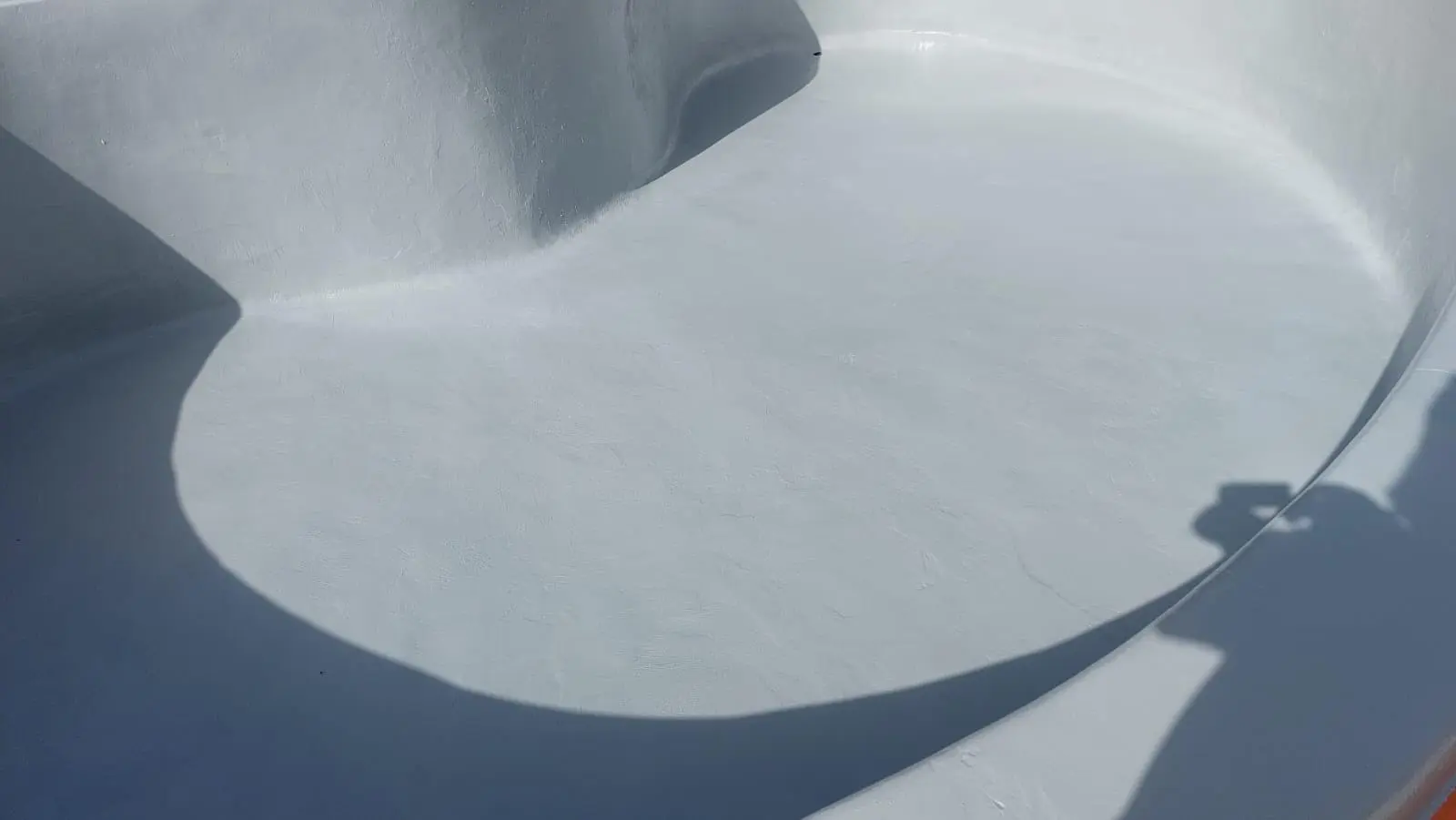
Choosing the right type of pool for your property
The type of pool drives the budget, the length of the works and how freely you can shape the basin. These are the four formats owners most often ask us about:
Reinforced concrete pool
Steel-reinforced concrete lets you choose any shape, depth or size, which is why it suits sloping plots as well as contemporary villas. The structure is built on site, around the pipework it will contain.
It is then finished with a liner, tiles or a resin coating, a choice that shapes both the look of the water and the maintenance ahead.
One-piece shell pool
A factory-made polyester shell (piscine coque) is lowered into a prepared excavation, levelled and backfilled. Shapes are limited to the manufacturer's range, but less work happens on site.
Access is the deciding factor: the shell arrives in one piece, so the delivery route and the crane position are checked during the site visit.
Lap pool
A long, narrow basin designed for swimming lengths rather than lounging. It can run along a boundary wall or a terrace and often takes less garden space than a classic rectangle.
Because length is the priority, the survey focuses on ground levels and on the setbacks set by the local zoning plan.
Submerged sun ledges
A shallow platform just below the surface (plage immergée) lets you set loungers in a few centimetres of water. We built this feature into a geometric pool in Saint-Cyr-sur-Mer.
It works well for families with young children and for guests who would rather cool off than swim.
How a new pool is built, step by step
Whatever the finish, a pool that lasts depends on what happens underground. This is the sequence we follow on a new build; on a renovation, we start at the step that matches the condition of your basin.
We study the plot: slope, soil, access for machinery, distance to the house and to the boundaries, and where the afternoon sun falls. The result is the position of the pool, the location of the equipment room and the drawings needed for the town hall.
Excavation only starts once consent has been granted and the period during which neighbours can contest it has been taken into account.
The hole is dug to the final shape plus working space. In Provence we regularly meet limestone rock or clay that swells and shrinks with the seasons, and each changes the method: rock may need breaking out, clay calls for a carefully prepared base.
For a concrete pool, the floor and walls are reinforced with steel and cast, with the skimmers, return inlets and main drain set in place so that they are sealed into the structure.
Buried pipes run to the equipment room, where the pump, the filter and the water treatment are installed, each on its own protected electrical circuit.
The basin then receives its waterproof finish: a reinforced liner, mosaic or large-format tiles, or a resin coating. Your choice depends on the look you want and how much maintenance you are prepared to take on.
The coping stones (margelles) are laid with a slight fall away from the water, followed by the surrounding deck in natural stone, porcelain or exposed-aggregate concrete, with a non-slip surface in every case.
The pool is then filled, the water balanced and the safety device fitted, and we show you how each piece of equipment works before handover.
Planning rules and French formalities for a pool
French planning law classifies a pool by the surface area of its basin, and each commune adds its own rules through its local zoning plan (Plan Local d'Urbanisme, or PLU). Here is what applies to most private outdoor pools:
Taxes and declarations to plan for
How ACR Provence supports you
Renovating an existing pool: warning signs and remedies
Many villas in Provence change hands with a pool that is several decades old. Before choosing between a simple refresh and a full renovation, it helps to read the symptoms correctly:
| What you notice | What it often means | What we typically do |
|---|---|---|
| The water level keeps dropping | A leak in the finish, at a fitting or in the buried pipework | Locate the leak, repair the faulty point, then renew the waterproof finish if needed. |
| Faded, wrinkled or torn liner | UV and chemical wear: the liner has reached the end of its life | Fit a new reinforced liner, or switch to tiles or resin on a sound structure. |
| Cracked or loose tiles | Movement of the structure, frost damage or failed adhesive | Assess the concrete shell, repair it, then retile or apply a resin coating. |
| Worn coping, slippery deck | Porous stone, broken joints or a surface never meant to be walked on wet | Replace the coping and deck with non-slip stone, porcelain or concrete. |
| Noisy pump, cloudy water | Undersized or ageing filtration and limescale build-up | Upgrade the equipment room: pump, filter and water treatment. |
| No safety device | A device that was never fitted, or has since been removed | Install an approved alarm, barrier, safety cover or shelter. |
Pool questions from owners living abroad
Can the pool be built while I am living outside France?
Yes, and it is a common situation for second-home owners. What matters is that the key decisions (position, finish, coping stone) are made before excavation starts, and that someone coordinates every trade on the ground. We explain how remote owners are kept informed in our page on project management for non-resident owners.
Which safety device is compulsory for a private pool in France?
Since the law of 3 January 2003, every in-ground private pool must have at least one approved device: a barrier (NF P 90-306), an alarm (NF P 90-307), a safety cover (NF P 90-308) or a shelter (NF P 90-309). The rule also applies to pools at holiday rentals, and whoever builds or equips the pool must give the owner a technical note describing the device.
What drives the cost of a new pool or a pool renovation?
The main factors are the type of structure, the size and depth of the basin, the soil (rock is slower to excavate), access for machinery, the chosen finish, the size of the deck and the level of equipment such as heating, an automatic cover or water treatment. For renovations, the condition of the concrete shell and of the buried pipework makes the biggest difference. Our renovation cost guide for Provence explains how budgets are put together, and every project starts with a free, detailed quote.
When should I start if I want to swim next summer?
Count backwards from the date you want to swim: the planning file and its review (one month for a prior declaration, two months for a building permit, longer in protected areas), then the works, then the first filling, which can be restricted during a summer drought. Starting the design in autumn usually leaves the most room for manoeuvre.
Where we build and renovate pools
Our four agencies, in Salon-de-Provence, Cavaillon, Trans-en-Provence and Le Cannet, cover pool projects across the Bouches-du-Rhône, Vaucluse, Var and Alpes-Maritimes. For coastal properties, see our overview of renovation work on the French Riviera.
Continue planning your outdoor project:
Pool house construction in Provence | Remote project management | Guarantees and after-sales
Recent pool work by our teams
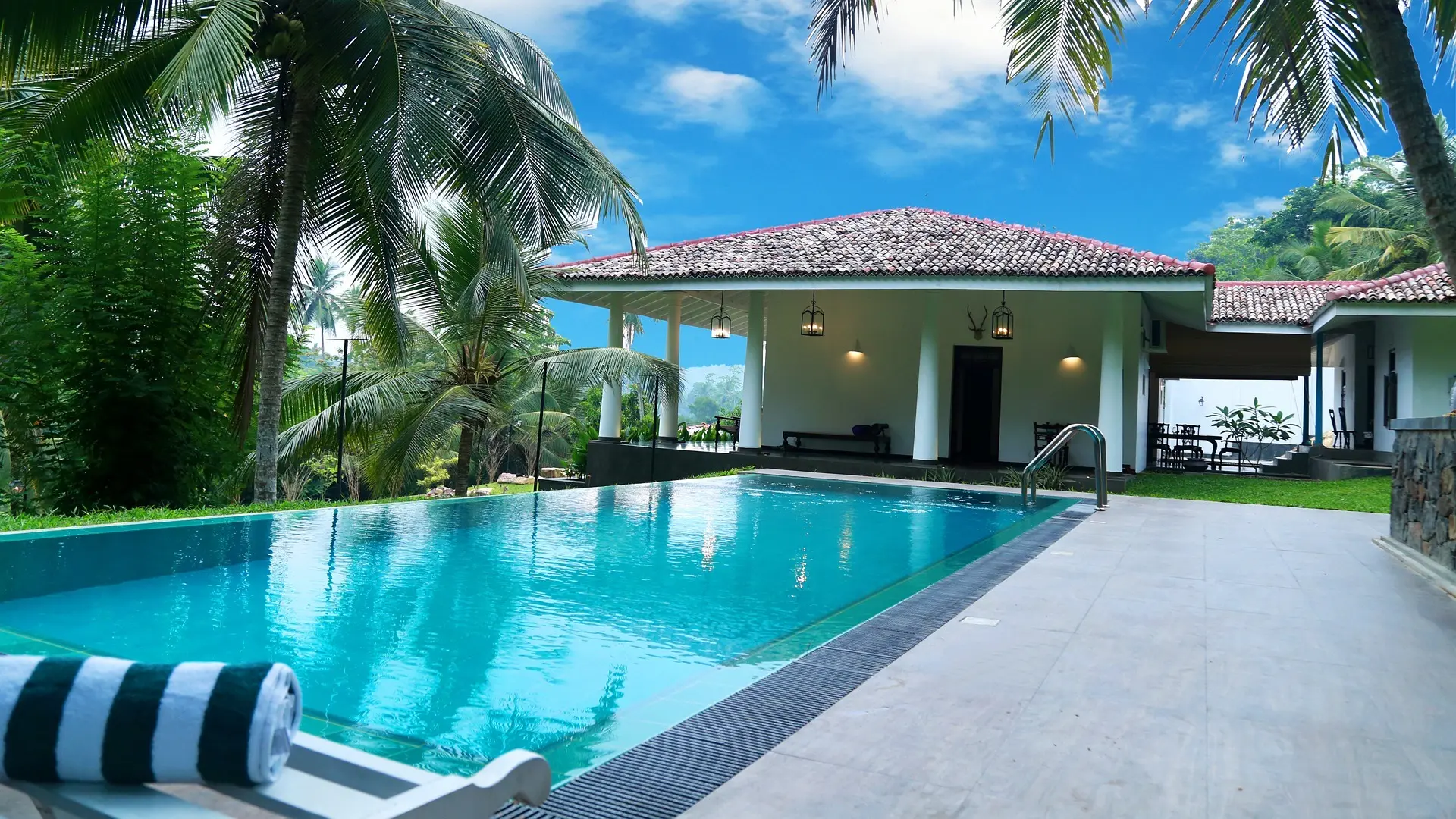
Saint-Cyr-sur-Mer, Var
A geometric concrete pool with submerged sun ledges and a light-coloured finish.
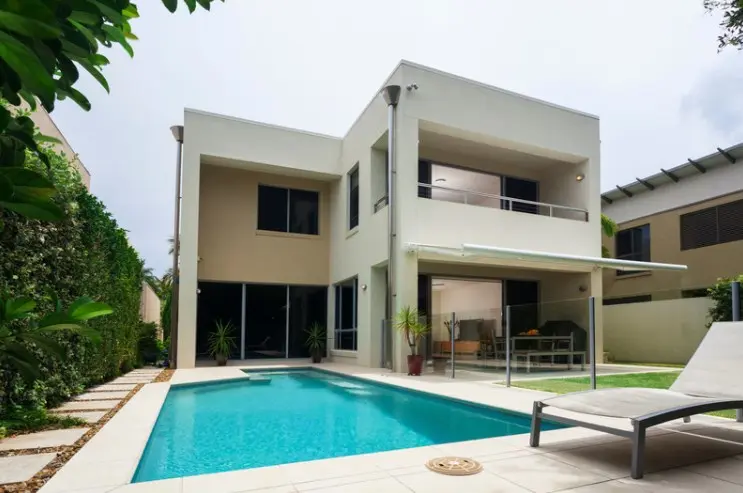
Toulon, Var
A new two-storey villa delivered with its concrete pool, terrace and landscaped garden.
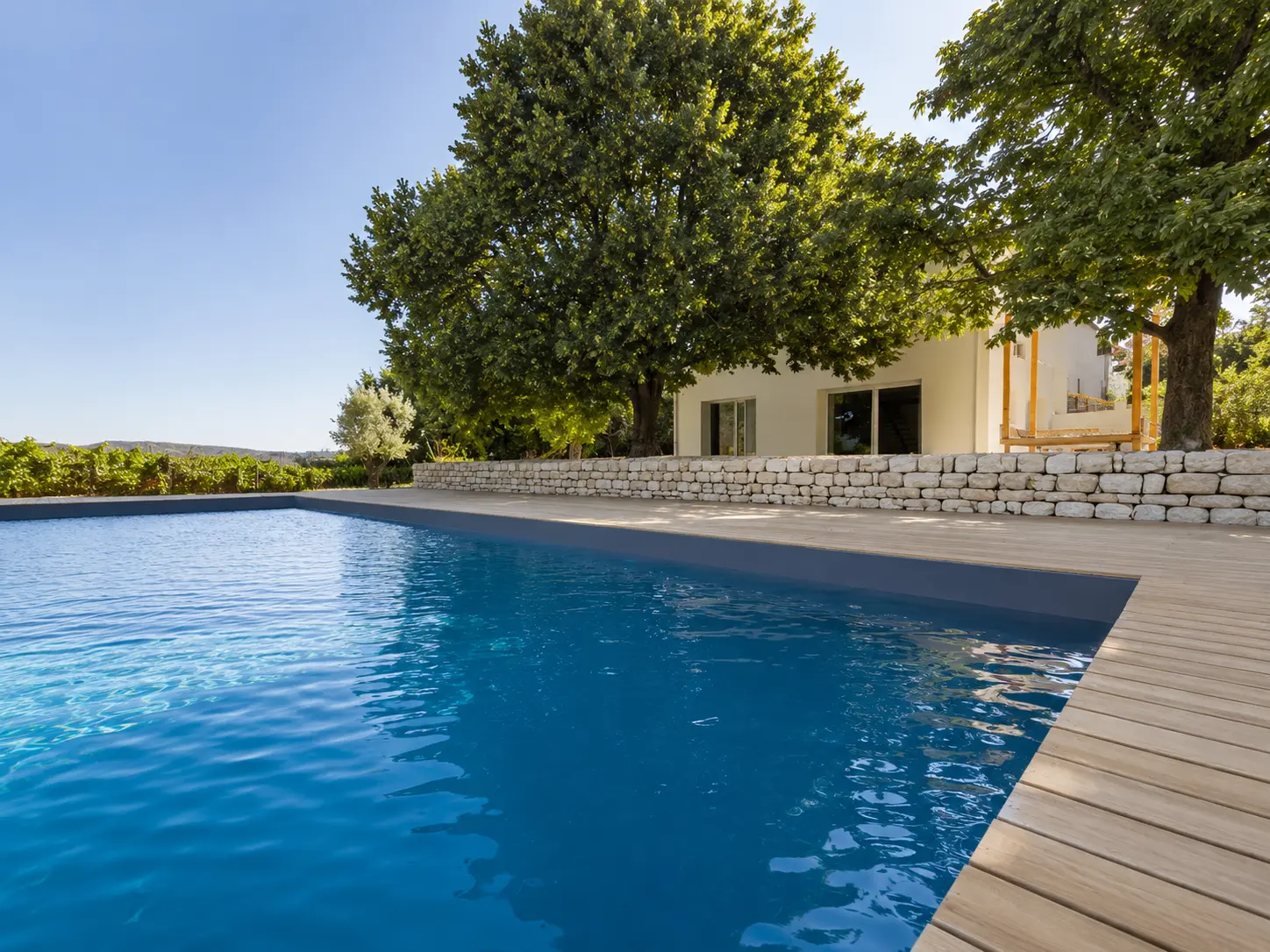
Puyricard, Aix-en-Provence
New landscaping around the pool as part of a whole-villa renovation, with refreshed facades and a new driveway.
All our services in English
Kitchens, extensions, facades and energy upgrades: see everything ACR Provence handles in Provence and on the French Riviera.