Buying and Renovating Property in Provence
A practical guide for foreign buyers
A stone farmhouse in the Luberon, a village house in the Alpilles, a 1970s villa in the hills above the French Riviera: most homes that British and American buyers fall for in Provence need work, and the renovation often weighs as much as the purchase price itself. The French buying process runs on its own timetable, and it leaves very little room to discover a serious defect once the contract is signed.
This guide shows how to line up the two projects, the purchase and the works, so that each decision is taken with the right information in hand. It is written by ACR Provence, a general building contractor that coordinates every trade on homes across Provence and the French Riviera from four local agencies.
Get a free quote
Five checks to make before you sign for a property
A listing tells you about the view and the number of bedrooms; it says very little about the roof timbers or the septic tank. French sellers must supply a pack of technical reports, the dossier de diagnostic technique (DDT), but those reports do not replace a builder's eye. These are the five areas we look at when a buyer asks us to walk round a property with them.
France has no routine equivalent of a British building survey or an American home inspection. Cracks in load-bearing walls, sagging roof timbers, damp at the foot of stone walls or a cement render that traps moisture are all common in older Provençal houses, and none of them is properly covered by the mandatory reports.
A visit with a builder before you commit shows whether a defect is cosmetic or structural, and which works have to come first. It also means you negotiate the price on facts rather than guesses.
The energy performance certificate, the diagnostic de performance énergétique (DPE), grades a home from A to G and is part of the seller's reports. It matters more than many buyers expect: the lowest-rated homes are being progressively withdrawn from the long-term rental market, and a poor grade usually points to single glazing, an uninsulated roof or an ageing heating system.
Whether you plan to let the house or simply to live in it through a cold mistral winter and a hot summer, read the DPE alongside the building itself. Insulating a roof, replacing windows or changing the heating is far easier to organise before the furniture arrives.
What you are allowed to build depends on the local zoning plan, the plan local d'urbanisme (PLU), kept at the town hall. Adding a room, a pool or a pool house, changing windows or repainting a facade may call for a déclaration préalable (prior declaration) or, for larger projects, a permis de construire (building permit).
Close to a listed monument or inside a protected village, the Architecte des Bâtiments de France (ABF) reviews the application and can impose materials, colours and proportions. Checking this before you buy avoids paying for a house whose planned extension will never be approved.
Many rural properties are not on mains drainage and rely on a private system, known as assainissement non collectif. A local public service inspects these installations and its report is part of the seller's pack. If the system does not comply, the buyer has one year from the sale to bring it up to standard.
The water supply, rainwater drainage around the walls and the state of old pipework deserve the same attention, especially if your plans add bathrooms or a pool.
A charming lane just wide enough for a small car is also a lane where no concrete mixer, skip or crane can reach the front door. Steep plots, shared driveways and town-centre houses without parking all make a renovation slower and dearer, because materials are carried by hand or scaffolding needs a permit to stand on the street.
These constraints never appear on a listing, yet they weigh on every quote. Ask how a builder would bring materials and equipment to the house before you settle on a budget.
What the Provençal climate and terrain mean for your plans
Provence is not one single building market: the same budget buys very different projects in the Alpilles, the Luberon or on the coast. Four local realities, however, shape almost every renovation a new owner takes on.
Summer heat slows exterior work such as rendering and roofing, and many suppliers and trades scale down in August. Buyers who complete in spring and expect to move in by July are often disappointed.
- Schedule exterior works for spring or autumn.
- Order windows and made-to-measure items early.
- Keep interior works for the hottest weeks.
The mistral dries renders too fast and drives rain into poorly sealed joints, while strong sunlight fades paint and dries out timber. Materials that perform well in northern Europe do not always last here.
- Breathable lime renders on old stone walls.
- Mineral paints and UV-resistant finishes.
- Shutters and joinery treated for sun exposure.
Large parts of Provence sit on clay that shrinks during long dry spells and swells again when the rain returns. Recurring cracks above doors and windows, or doors that stick at certain times of year, can point to ground movement.
- Find out whether cracks are old and stable or recent.
- Look at gutters and drainage close to the walls.
- Take advice before adding weight such as an upper floor.
In wooded areas classed as at risk of forest fire, owners have a legal duty to clear brush and thin trees around their buildings, known as the obligations légales de débroussaillement. The seller has to tell you if the property is concerned.
- Ask whether the plot lies in a clearing zone.
- Allow for clearing and garden works in your plans.
- Prefer non-combustible materials close to the house.
How the purchase and the renovation fit together
The French buying process gives you natural windows to gather quotes and apply for permits. Used well, they allow the works to start soon after you take ownership instead of months later.
Visit with a builder while you still have room to negotiate.
- Walk through the house and outbuildings with the contractor.
- Separate essential works from the wish list.
- Read the seller's technical reports together.
- Identify which works will need a permit.
The compromis de vente binds both parties, but a buyer of a home has a ten-day cooling-off period after receiving the signed contract.
- Ask the notaire (the public official who handles the sale) to add conditions precedent, for example on your mortgage or on obtaining a permit.
- Request a detailed written quote for the works.
- Check that the quote separates each trade and each phase.
Around three months usually separate the two signatures: this is the window to prepare the renovation file.
- Submit the prior declaration or building permit application.
- Finalise the plans and choose materials.
- Book a start date and order long-lead items.
- Decide how you will follow the site from abroad; our page on project management for non-resident owners sets out the options.
The final deed, the acte authentique, is signed at the notaire's office and you receive the keys. Works can begin as soon as the permits are in place.
- Site set-up, protection of the property and any street permits.
- A single contact coordinating every trade under one contract.
- Final inspection and handover, the réception des travaux, with any snags recorded in writing.
- The legal guarantees that start at handover are explained in our guide to guarantees and after-sales service.
Which type of Provençal home are you buying?
The same checks apply everywhere, but each type of house brings its own priorities once the sale goes through:
Narrow, tall houses joined to their neighbours. Expect work on stairs, floors and damp in party walls, with materials often carried in by hand and heritage rules on anything visible from the street.
Stone farmhouses and country manors, often extended over several generations. Roofs, lime renders, septic systems and turning barns into living space usually top the list.
Houses built from the 1960s onwards, generally sound but dated. New owners tend to open up the living spaces, improve insulation and redo pools and terraces. Our renovation work on the French Riviera covers the coastal towns in detail.
Questions foreign buyers ask us
Can you visit a property with me before I make an offer?
Yes. We can meet you or your estate agent at the property, assess the condition of the building and outline the works it needs. The written quote is free and is sent within 48 hours.
Can I make the purchase conditional on getting planning permission?
Yes. A condition precedent can be written into the compromis de vente so that the sale only goes ahead if the permit you need is granted. Your notaire drafts the clause; we can help prepare the plans and the application behind it.
Do I need to be in France while the works are carried out?
No. Many buyers live abroad and come over at key stages. What matters is agreeing in advance how decisions are made and how you are kept informed while you are away.
What protection do I have once the works are finished?
Structural works are covered by the garantie décennale, a compulsory 10-year insurance-backed warranty that French builders must hold. Shorter guarantees apply to fittings and to defects recorded at handover.
How much should I budget for the renovation?
It depends on the size of the house, its condition, site access and the level of finish you want. Our renovation cost guide explains how each of these factors weighs on the final figure.
Four agencies close to the areas buyers look at
Wherever you are buying, one of our agencies is within reach of the property for visits and site meetings:
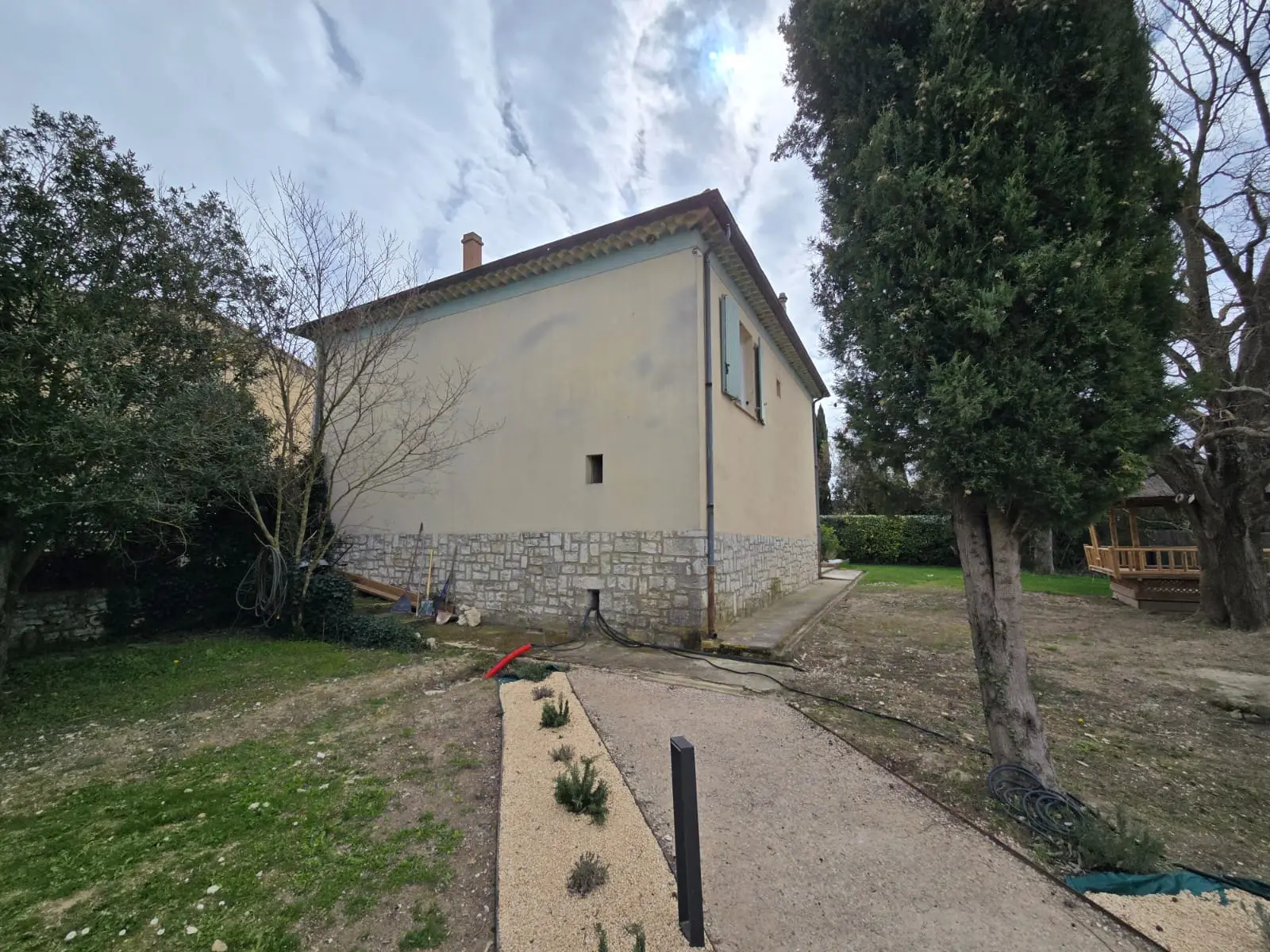
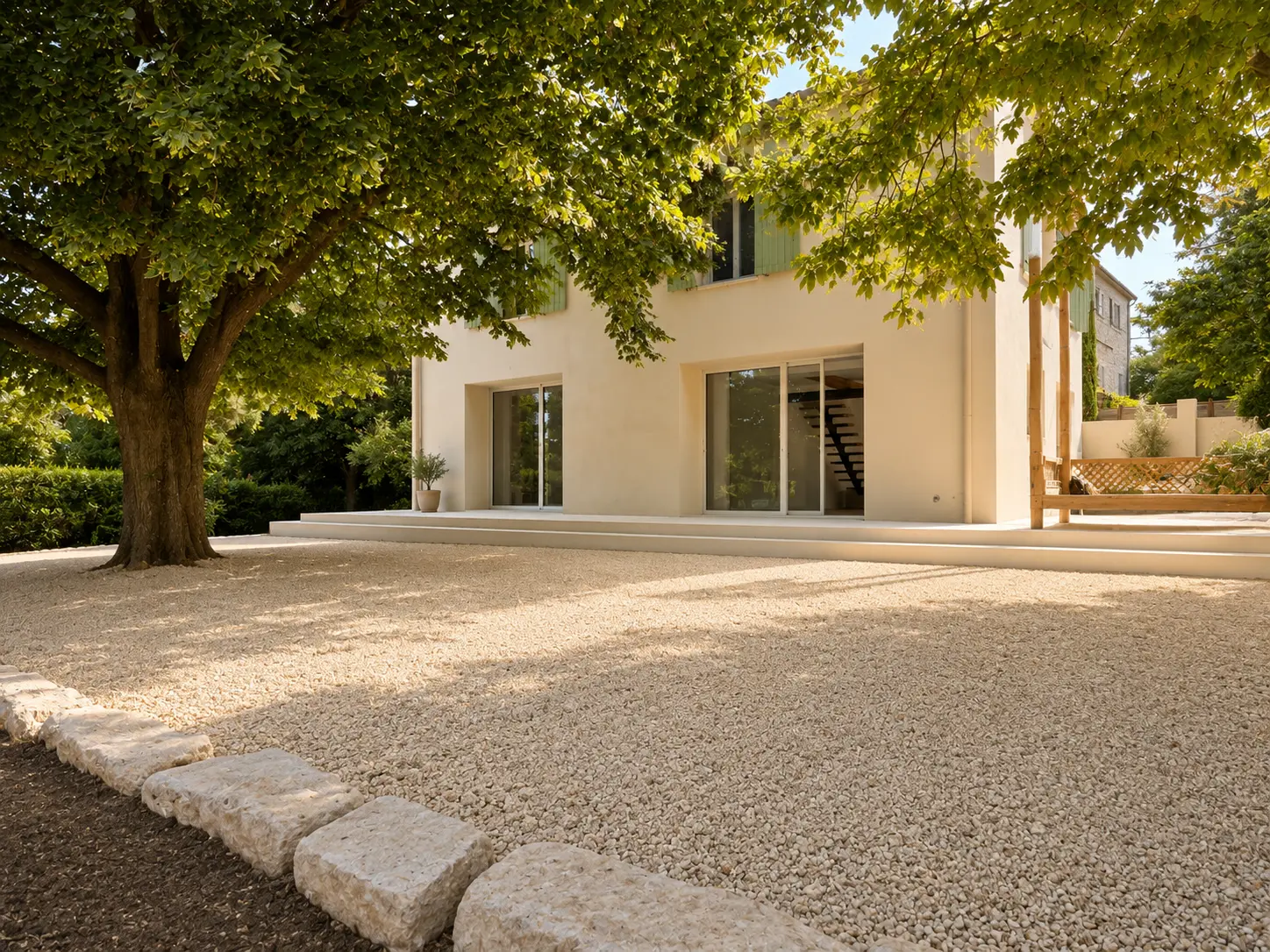
Before and after: a villa renovation in Puyricard
These photos come from one of our completed projects, a villa in Puyricard on the northern edge of Aix-en-Provence. They show how far a dated exterior can change once the works are planned as a whole.
Keep planning your project:
Renovation costs in Provence | Project management for owners living abroad | Guarantees and after-sales service
Looking at a property in Provence?
Send us the listing or the address: we will arrange a visit and a free, detailed quote within 48 hours.