Renovation company in the Luberon
Gordes · Bonnieux · Roussillon · Lourmarin
A stone house in the Luberon is a wonderful thing to own and a demanding thing to renovate. Between the perched villages of the northern slopes, the ochre country around Roussillon and the farmland that runs south of the ridge towards Lourmarin, the massif has its own building culture: thick limestone walls, lime renders, dry-stone terraces and planning rules shaped by a regional nature park. A builder working here has to read all of it before touching a wall.
ACR Provence is a general contractor with an agency in Cavaillon, at the western gateway to the Luberon. We renovate village houses, farmhouses and villas across the massif, coordinate every trade under a single contract and help you prepare the applications the town hall will ask for. That arrangement matters when your main home is in London, New York or anywhere else far from Provence; our guide to managing a renovation from abroad explains how site supervision works in practice.
Get a free quote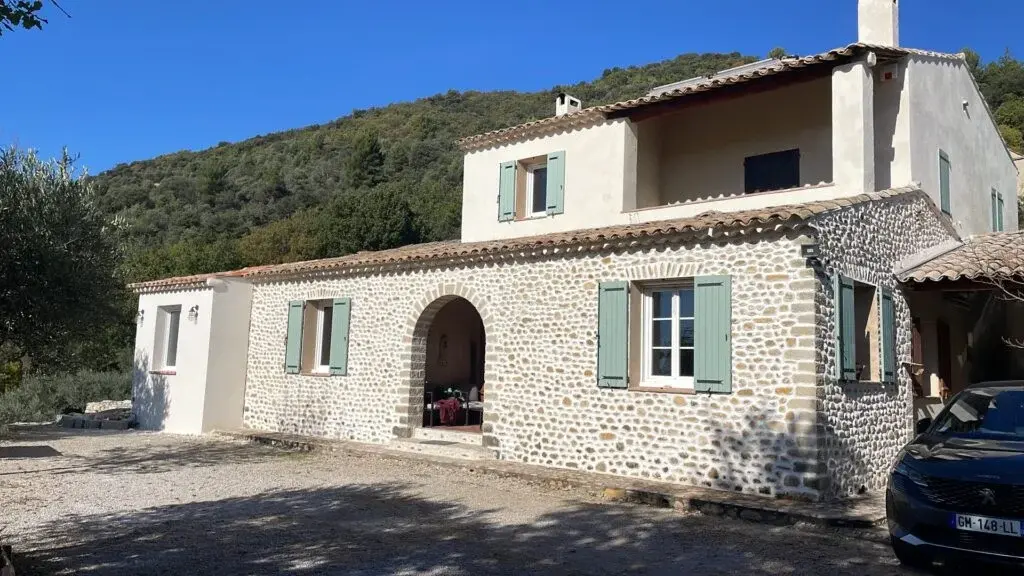
Four Luberon landscapes, four ways of building
The Luberon is not one place but several. A single limestone ridge separates villages with very different houses, soils and rules, and the constraints on a building site change with them. This is how we read the territory before we price any job:
Houses here are built into the rock and stacked along steep lanes, often with vaulted cellars and rubble-stone walls well over half a metre thick. Rooms are small, floors are uneven, and every opening onto the street is part of the village skyline.
Most of these villages lie within the protection perimeter of a listed monument, so any visible change – windows, shutters, render colour, roof tiles – is reviewed by the state heritage architect (Architecte des Bâtiments de France, ABF).
The ochre cliffs north of the ridge give their colour to the houses around them. Façade shades are a matter of local identity: town halls expect warm tones drawn from the ochre palette, and a bright white or grey render can be refused.
Older houses often carry several layers of render added over the decades, some of them cement-based, which trap moisture in the stone behind them.
South of the ridge the land opens onto vineyards and orchards facing the Durance valley. Properties are larger and more isolated: farmhouses, country houses and their outbuildings, often extended piece by piece over two centuries.
Parts of this plain sit on clay soils that shrink in drought and swell after heavy rain, which shows up as diagonal cracks around doors and windows. Many isolated houses are also not connected to mains drainage.
On the flatter ground at the foot of the massif, you find townhouses, village houses and 20th-century villas close to the Calavon river and the canals of the Sorgue. Ground floors in older buildings frequently suffer from rising damp.
Converting a cellar or ground-floor store into living space looks easy on paper, but the walls need to dry out first or the new finishes will blister within a season.
How a Luberon project runs, from first visit to handover
Many of our Luberon clients live elsewhere for part or most of the year. The sequence below is built around that reality, and it starts at our Cavaillon agency, a short drive from most villages of the massif.
A first visit on site
We meet you at the property – or the person you trust with the keys if you are abroad – and walk through every room, the roof space, the outbuildings and the grounds. We note what you want to change and what the building itself needs, then send a detailed, free quote within 48 hours.
Reading the building and the rules
Before drawings are finalised we check the local zoning plan (PLU), heritage perimeters, the nature-park charter, and the flood and clay-soil maps for your plot. On old stone houses we also look closely at walls, floors and roof timbers, because hidden faults are what upset budgets later.
Planning application
Depending on the work, the town hall needs either a prior declaration (déclaration préalable) or full planning permission (permis de construire). We help you gather the drawings, photographs and material references, and adjust the project if the heritage architect asks for changes.
One contract, coordinated trades
Masonry, roofing, plumbing, electrics, joinery and finishes are scheduled by one team, so the trades follow each other in the right order and you deal with a single point of contact rather than a list of separate tradesmen.
Handover and guarantees
At the end we inspect the work together, list any snags and sign the handover. Structural work is then covered by the ten-year insurance-backed warranty required by French law (garantie décennale); our page on guarantees and after-sales care explains what each warranty covers.
Village house, mas or modern villa: what changes in the Luberon
Planning rules specific to the Luberon
In the Luberon, the town hall is only the first layer. Up to four sets of rules can apply to the same house, and knowing them early avoids a refused application or a stalled site.
Almost the whole massif lies within the Parc naturel régional du Luberon, whose charter protects landscapes, dry-stone terraces and the outline of the villages. Its principles are carried into local zoning plans, which set rules on roof slopes, tiles, colours and the siting of new volumes.
Within 500 metres of a listed monument, the heritage architect must give an opinion on any exterior change. In practice this can mean lime render instead of cement, wooden shutters in a traditional colour, or round clay tiles on the roof – and a longer processing time for your application.
Houses close to woods and scrubland are subject to a legal duty to clear vegetation around buildings (obligations légales de débroussaillement), within a radius set by prefectoral order – commonly 50 metres. The duty falls on the owner and is checked by the authorities.
Isolated houses usually rely on a private septic system inspected by the local sanitation service (SPANC). The inspection report is part of every sale file prepared by the notary (notaire), and a non-compliant system must be brought up to standard within one year of purchase.
Scheduling works around the Luberon climate
Hot, dry summers, a cold mistral in winter and frost on the higher plateaus: in the Luberon, the calendar matters as much as the materials. Here is how the seasons usually shape a renovation programme.
| Season | Conditions in the Luberon | Work that suits the season | Outdoor work |
|---|---|---|---|
| Spring (Mar–May) | Mild days, spells of mistral, occasional heavy showers | Renders, roofing, masonry, terraces | Ideal |
| Summer (Jun–Aug) | Heat regularly above 35 °C in the plain, villages full of visitors | Kitchens, bathrooms, electrics, interior finishes | Early mornings only |
| Autumn (Sep–Nov) | Warm start, then Mediterranean storms in October and November | Façades, structural repairs, exterior joinery | Ideal |
| Winter (Dec–Feb) | Frost on the plateaus, strong and cold mistral | Stripping out, interiors, preparation of spring works | Limited |
| General guidance only. Lime renders and mortars need mild temperatures and protection from strong wind to cure properly; the actual schedule is set after the site visit and depends on planning approval dates. | |||
Why a Cavaillon-based contractor for the Luberon
Distance is the main risk in any project managed from abroad. Being based at the foot of the massif reduces it.
Our Cavaillon agency at 302 Cr Sadi Carnot sits between the Calavon valley and the Sorgue, which keeps travel to site short and lets us check something in person rather than guess from a photo.
From structural masonry to the last coat of paint, the whole job sits under one contract. You do not have to find, brief and chase separate tradesmen from another country, and responsibility for the result is clear.
Old stone walls need insulation methods that let them breathe. For work eligible for state grants we team up with RGE-certified partners; our page on energy renovation in Provence sets out the options.
Luberon renovation: owners' questions
Do you take on work in the perched villages such as Gordes or Bonnieux?
Yes. These are among the most rewarding projects in the Luberon, but they need more preparation than a house on open ground: an agreement with the town hall on parking and deliveries, materials acceptable to the heritage architect, and a schedule that avoids the busiest weeks of the tourist season where the village asks for it.
How long does planning approval take for a house in the Luberon?
By law, the town hall has one month to process a prior declaration and two months for planning permission on a house. Each period is extended by one month when the heritage architect must be consulted, which is common in Luberon villages. If documents are missing, the town hall asks for them and the clock only starts once the file is complete, so a well-prepared application saves real time.
Can the renovation go ahead while I am living abroad?
Yes, most of our Luberon clients are not on site every week. Once the quote is signed, you only need to arrange access to the property; the coordination of trades, orders and inspections is handled by our team, and the key decisions are put to you as the work progresses.
Are Luberon projects covered by the same 10-year warranty as elsewhere in Provence?
Yes. The ten-year warranty applies to structural work wherever the property is located, and French law requires the builder's insurance details to appear on the quote, so you can check the cover before you sign.
Recent work in the Vaucluse
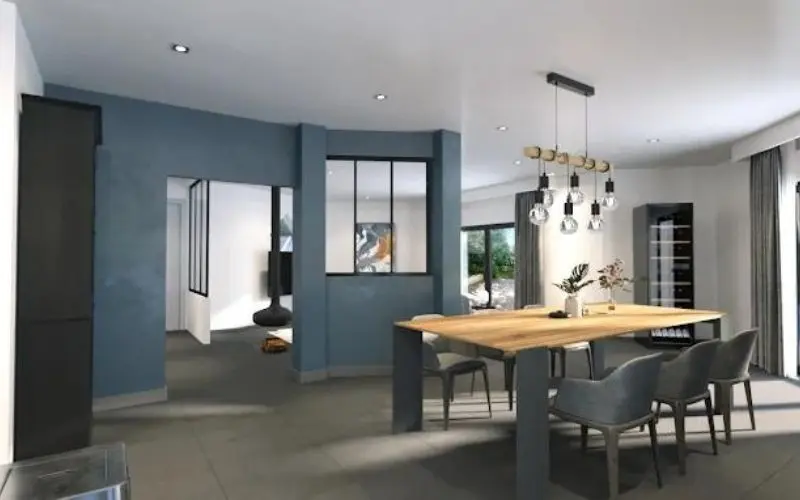
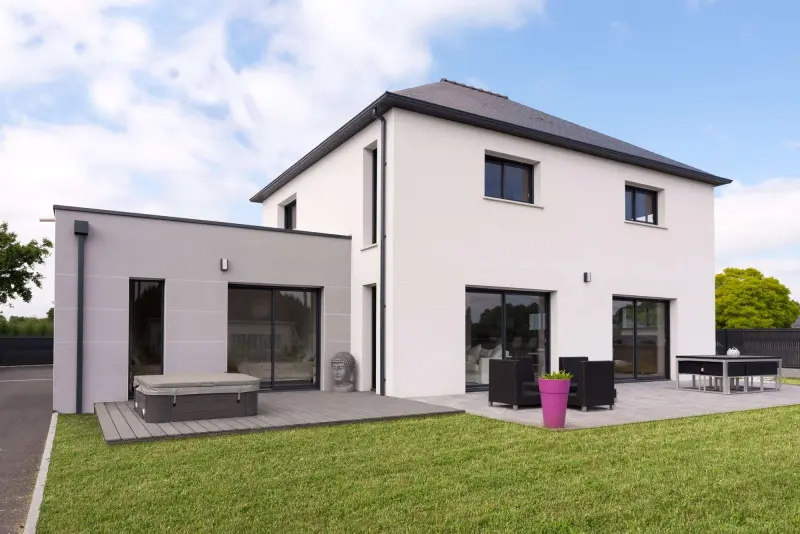
We do not publish the addresses of our clients' homes, but these two jobs in Carpentras, a short drive north of the Luberon, show the kind of work our teams carry out in the Vaucluse: a full house renovation and a house extension.
Villages we cover across the Luberon
From our Cavaillon agency we cover the whole Vaucluse side of the massif, from the Calavon valley to the villages of the southern slopes:
West of Cavaillon, the Alpilles have a character of their own; see our page on villa renovation in Saint-Rémy-de-Provence.
Also useful for your Luberon project:
All our services and areas in Provence | What drives renovation costs in Provence
Your Luberon renovation project
Tell us about your property and receive a free, detailed quote within 48 hours.