Facade renovation in Provence
and on the French Riviera (Côte d'Azur)
Strong sun, salt spray on the coast and the mistral inland are hard on outside walls. After a few decades, most Provençal houses show the same signs: render that sounds hollow when you tap it, hairline cracks running from the corners of windows, paint that rubs off as powder, dark streaks below the eaves. For a buyer, or an owner who spends only part of the year here, the facade is often the first job to plan, because water that finds its way behind the render keeps doing damage while the house stands empty.
ACR Provence is a general building contractor with four agencies across the Bouches-du-Rhône, the Var, the Vaucluse and the Alpes-Maritimes. For a facade, that means one company for the whole job: inspecting the walls, preparing the application to the town hall, scaffolding, masonry repairs, render and paint, with the works covered by the French 10-year building warranty (garantie décennale).
Get a free facade quote
What a facade renovation covers
No two facades need exactly the same treatment. After inspecting the walls, we combine the following operations according to what we find:
Pollution, algae and lichen build up fastest on north-facing walls and under trees. We wash at low or medium pressure, or use a fine abrasive process (hydro-gommage) on stone that must not be scoured, then apply a biocide and, where the wall needs it, a water-repellent treatment.
We tap the whole wall to find render that has come loose, then cut it back to a sound edge. Cracks are opened, filled and bridged with fibre-reinforced mortar or resin. Where concrete lintels, balcony edges or columns have split and the steel inside is rusting, the steel is cleaned and treated before the concrete is rebuilt. If a crack points to movement in the structure itself, we tell you before any render goes on.
Old stone houses need a lime render that lets moisture escape: sealing them under a cement or plastic coating traps damp inside the walls. Newer villas built in concrete block can take mineral, siloxane or thicker waterproofing coatings. The finish (scraped, floated or smooth) and the colour are chosen together, within the palette your town allows.
A facade is also its details. We re-bed loose tiles in the génoise, the rows of curved tiles under the roofline typical of Provence, rebuild chipped window surrounds and sills, restore the drip edges that stop water running down the wall, and repaint shutters and ironwork so the whole elevation is finished at the same time.
If you also want to insulate the walls from the outside, that work is explained on our page about energy renovation in Provence.
How a facade project runs
A facade job follows a fixed sequence, and most of the waiting happens before the scaffolding goes up:
You do not need to be in France for any of this: see how we organise renovation project management for non-resident owners.
Planning rules for facades in France
In France, the outside of a house is not entirely a private matter. Each town sets its own rules through its local development plan (plan local d'urbanisme, PLU), and these two points catch out many foreign owners:
Declaring the work
Colours and heritage areas
Questions from owners abroad
Do I need to be in France while my facade is renovated?
No. Once the quote is signed, we only need access to the outside of the property and water and electricity on site. You can follow progress from home and attend the final walk-round yourself, or ask a neighbour, an agent or your property manager to attend for you.
When is the best time of year to redo a facade in Provence?
Spring and autumn. Render and paint should not go on in strong heat, frost, rain or a hard mistral, because they dry too fast or not at all. As a guide, a detached house of around 120 m² needs two to three weeks on site once the scaffolding is up, so it is worth filing the paperwork a couple of months ahead.
What does the 10-year warranty cover on a facade?
The garantie décennale covers, for ten years after handover, defects that affect the soundness of the building or make it unfit for use, such as a waterproofing render that lets water through. Ordinary cosmetic wear is not included. Our page on guarantees and after-sales service explains how French building warranties work.
How is the price of a facade renovation worked out?
It depends on the wall area, the height and access for the scaffolding, how much render has to be removed and repaired, the type of render and finish, the number of windows and details, and whether the house sits in a protected area. We price each facade after a site visit; for typical budgets, see our renovation cost guide for Provence.
Which agency will look after your facade
Each facade project is handled from the agency closest to the property, so the site visit and follow-up stay local:
For villas along the coast, see our renovation company on the French Riviera.
A seaside facade in Saint-Cyr-sur-Mer
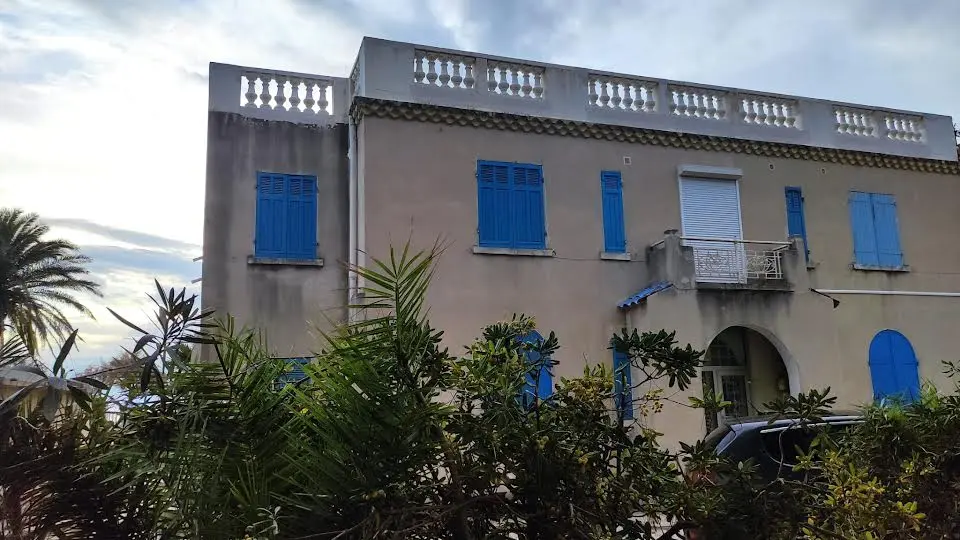
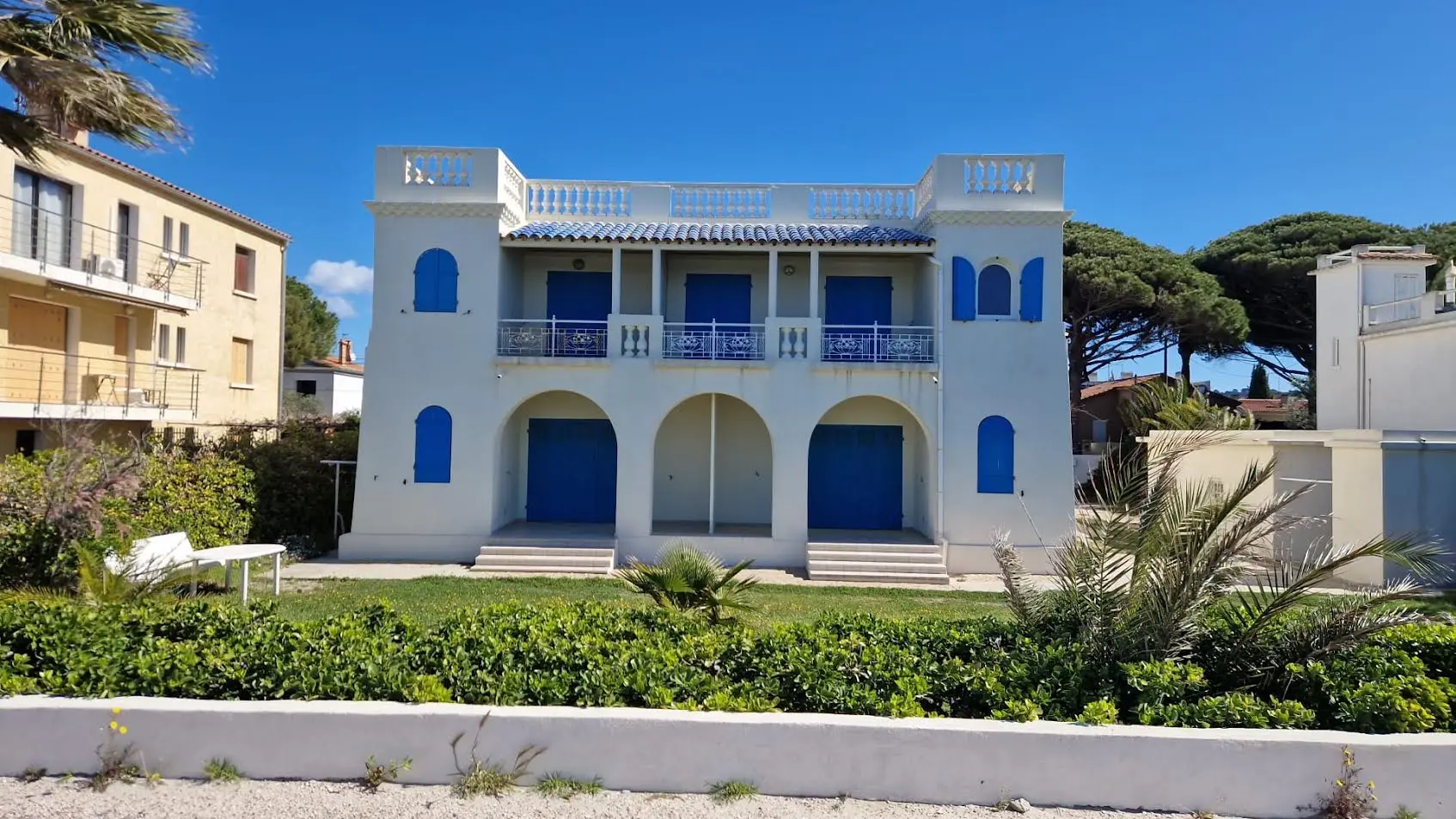
Coastal houses age faster: salt carried on the wind attacks render and rusts steel far more quickly than inland. The photos below show one of our facade projects, a seaside villa in Saint-Cyr-sur-Mer in the Var, before and after the work.
Planning a facade renovation in Provence?
Tell us about the property and receive a free quote within 48 hours.